Manufacturing module
Turning raw materials into finished goods at a computed rather than an estimated cost: a bill of materials per product, a production order that issues materials from the warehouse and receives the finished item, and an actual cost built on the weighted average of the materials consumed plus applied overheads — all with automatic stock and journal entries.
Before you start: manufacturing accounts
Purpose: the module is linked to the chart of accounts from Settings → Accounts. These accounts are what turn a production order into a correct journal entry rather than a silent stock movement.
| Setting | Used for |
|---|---|
| Raw material inventory | Credited with the value of materials consumed on issue. |
| Finished goods inventory | Debited with the cost of the produced item on closing. |
| Applied manufacturing overheads | Labour and running costs added to the order cost. |
| Work in progress | The interim account holding cost between opening and closing the order. |
Bills of materials (BOM)
Path: Manufacturing → Bills of materials — /manufacturing/boms
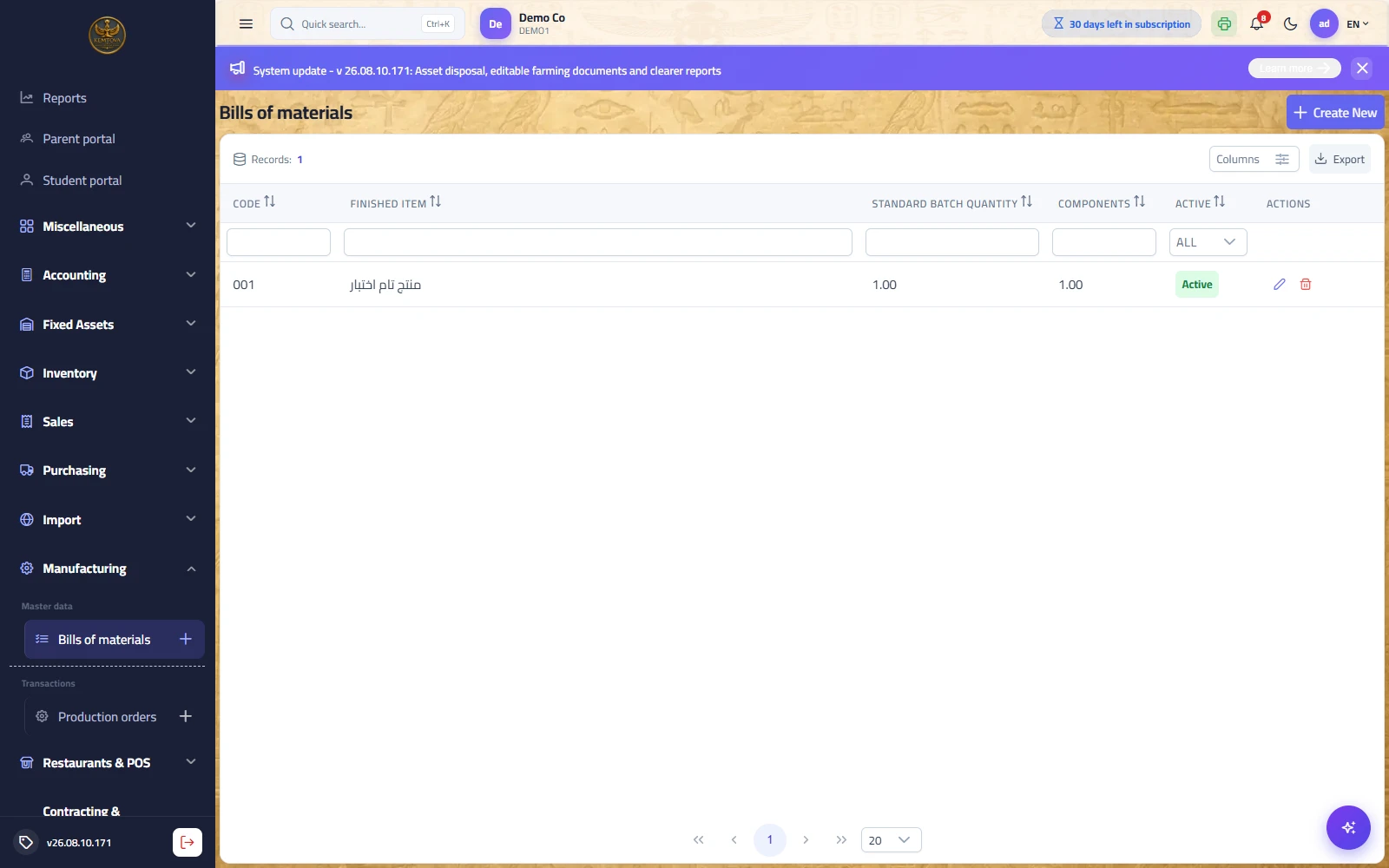
Purpose: the product recipe — what it takes to produce a standard quantity. Defined once and used by every later production order.
| Field | Description |
|---|---|
| Finished item | The resulting product — an inventory item. |
| Standard quantity | The quantity this recipe produces (say 100 units); component quantities relate to it. |
| Component lines | Materials with quantities and units per standard quantity. |
| Active | An inactive recipe disappears from production-order pickers without losing its history. |
Production orders
Path: Manufacturing → Production orders — /manufacturing/production-orders
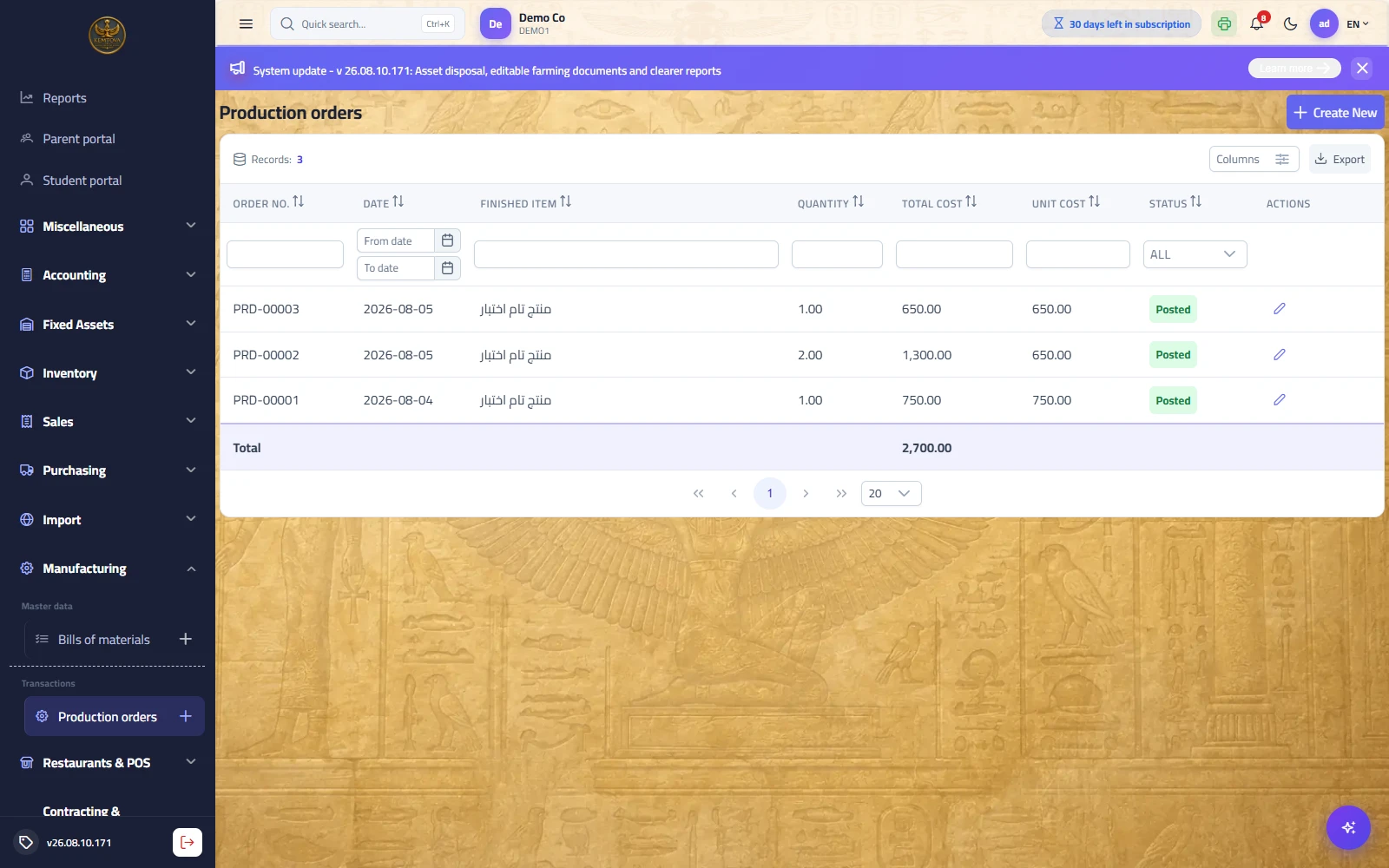
Purpose: the execution document. Pick the product and quantity and its components are pulled from the recipe, still editable (a material may be substituted for one order). An order has three states: draft, then in progress, then closed.
| Stage | What happens |
|---|---|
| Draft | Quantities and components are freely editable; no stock or accounting effect yet. |
| Execution (issue) | Materials are drawn from the warehouse at actual cost (weighted average); the system refuses the issue when stock is short. |
| Applied costs | Labour and running costs added to the order before closing. |
| Closing | The finished item enters the warehouse at cost = materials consumed + applied costs ÷ quantity produced. |
| Cancellation | Reverses the movements with counter entries rather than erasing them. |
PRD- prefix, managed from the counters screen.